- Home
- Academics
- Department
- Veterinary Anatomy
- Veterinary Physiology and Biochemistry
- Livestock Production Management
- Animal Genetics and Breeding
- Animal Nutrition
- Veterinary Microbiology
- Veterinary Pathology
- Veterinary Clinical Complex
- Livestock Farm Complex
- Veterinary Pharmacology and Toxicology
- Livestock Products Technology
- Veterinary Parasitology
- Veterinary Public Health and Epidemology
- Veterinary and Animal Husbandry Extension Education
- Veterinary Medicine
- Veterinary Surgery and Radiology
- Veterinary Gynaecology and Obstetrics
- Facilities
- Infrastructure
- Sister Institutes
- Events
- About Us
- Contact

Hon. Shri. Babanrao Pachpute Vichardhara Trust
Parikrama Veterinary Science College
Parikrama Veterinary Science College
Recognized by Veterinary Council of India, New Delhi and Government of India.
Affiliated to MAFSU, Nagpur,Maharashtra
Affiliated to MAFSU, Nagpur,Maharashtra

Department of Veterinary Physiology and Biochemistry
The Veterinary Physiology stands as a vital academic pillar, dedicated to the mastery of animal functional biology—the essential precursor to clinical proficiency. Our curriculum is meticulously engineered to provide an exhaustive understanding of the homeostatic mechanisms and systemic functions in domestic livestock species, forming the bedrock upon which animal health, metabolic productivity, and disease diagnostics are built.
Academic and teaching facilities –
1. Well-equipped Undergraduate Laboratories:
Equipped with a compound projection microscope with LCD display, nerve–muscle experiment software, and computerized physiology teaching software for various systems.
2. Hematology Equipment:
Includes instruments for blood analysis such as a clinical automatic blood analyzer, hemoglobinometer, and hemocytometer.
3. Clinical Physiology Unit:
Facilities available for recording physiological parameters like ECG, blood pressure, and respiration.
4. Analytical Instruments:
Comprising Kjeldahl apparatus, Monopan balance, and sphygmomanometer.
5. Advanced Research Equipment:
Includes sophisticated instruments such as a physiograph and spectrophotometer.
6. Environmental Physiology Equipment:
Consists of devices like a surface integrator, lux meter, anemometer, rain gauge, sling psychrometer, and Campbell–Stokes sunshine recorder.
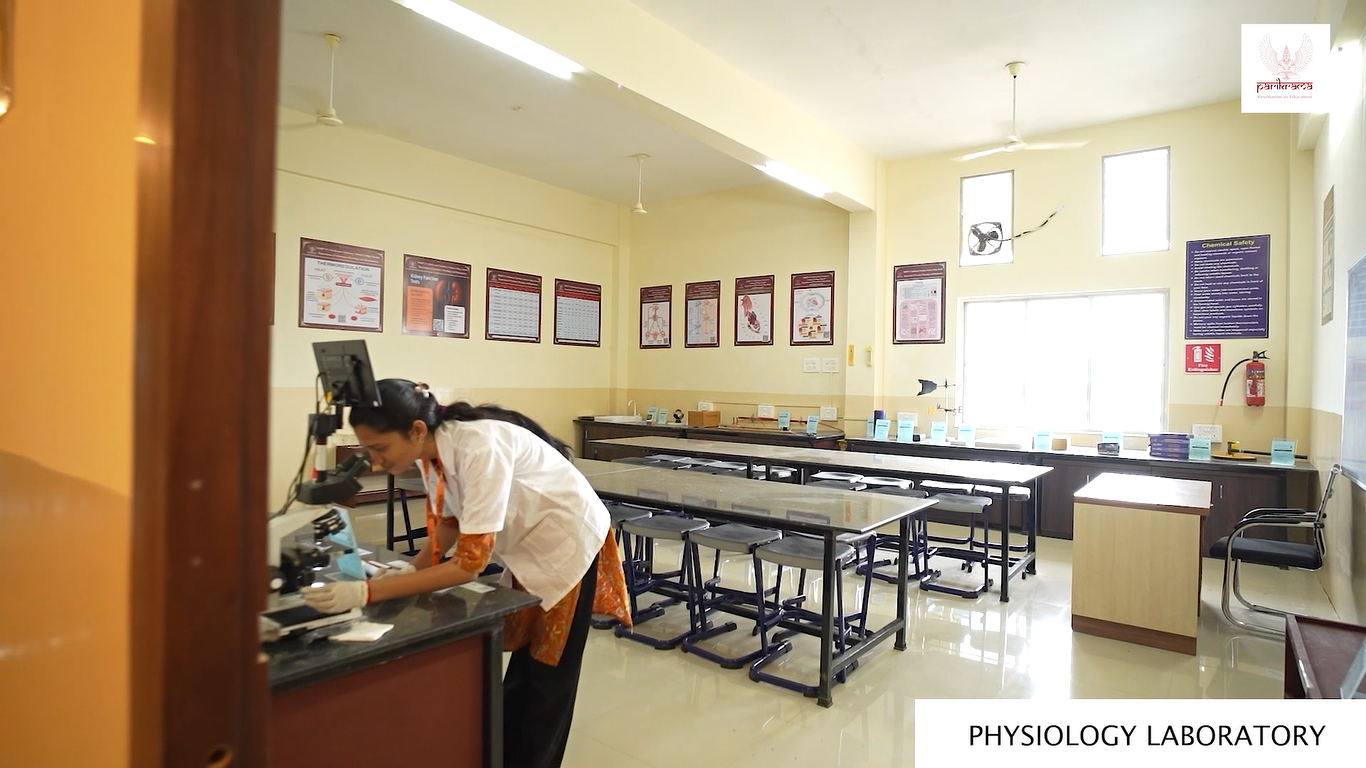
Physiology Lab
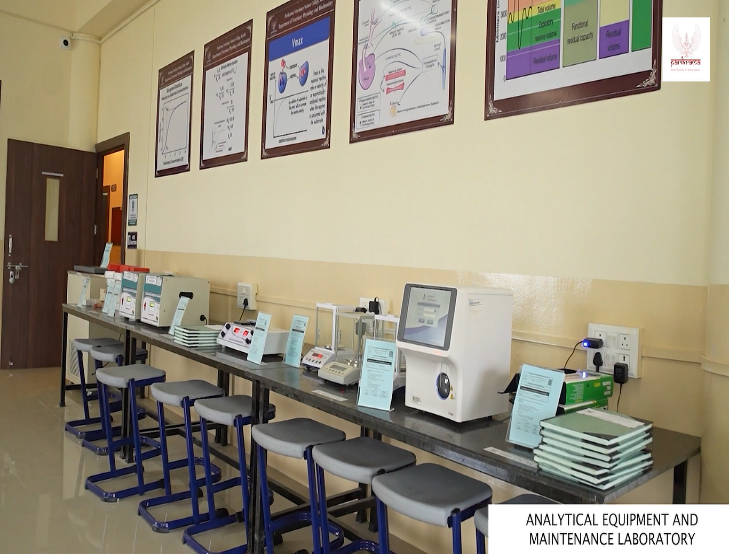
Analytical Equipment & Maintenance Lab
The Veterinary Biochemistry introduces students to the molecular and chemical basis of animal health, nutrition and disease processes.
The department provides practical training in metabolism, enzymes, biomolecules, clinical biochemistry and biochemical diagnostics.
Modern laboratory facilities enable students to develop skills in sample processing, biochemical estimation and interpretation of metabolic changes.
Laboratory facilities include:
- Biochemistry analyser
- Spectrophotometer/colorimeter
- Centrifuge
- pH meter
- Water bath
- Micropipettes and analytical laboratory equipment
- Students are trained to apply biochemical knowledge in clinical diagnosis, nutritional assessment and disease monitoring.
- The department promotes research-oriented learning in animal metabolism, nutritional biochemistry, biomarkers and livestock health improvement.
- Through practical-based education and scientific learning, the department prepares students for advanced veterinary practice and research.
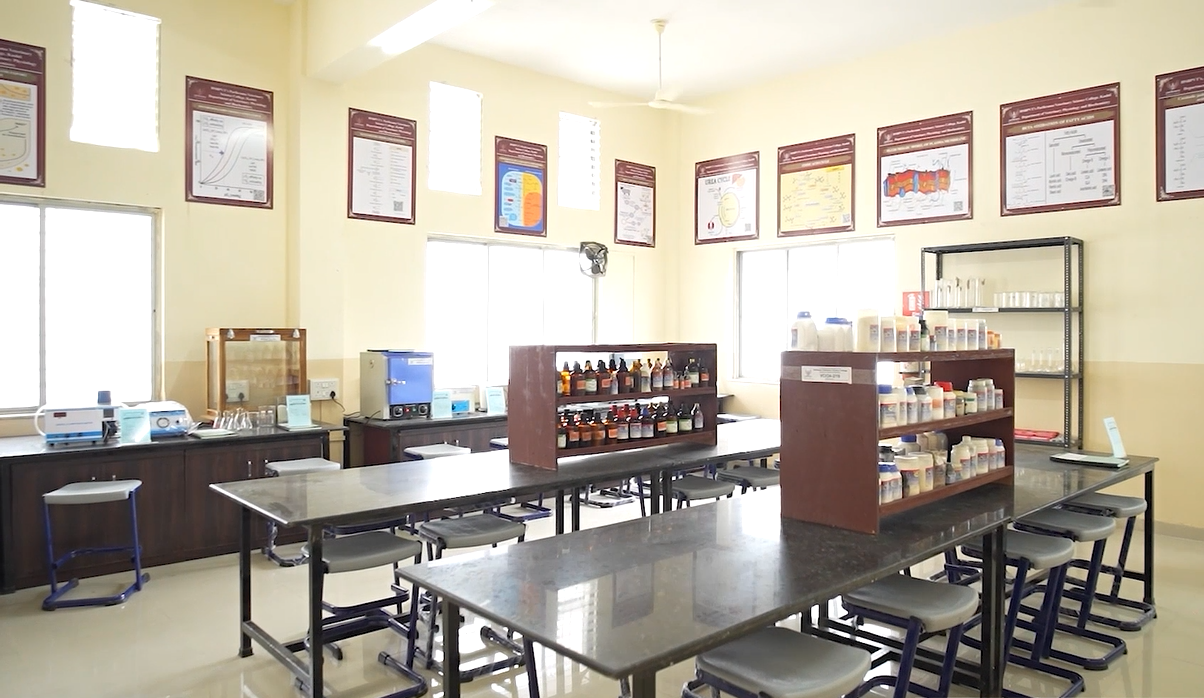
Biochemistry Lab
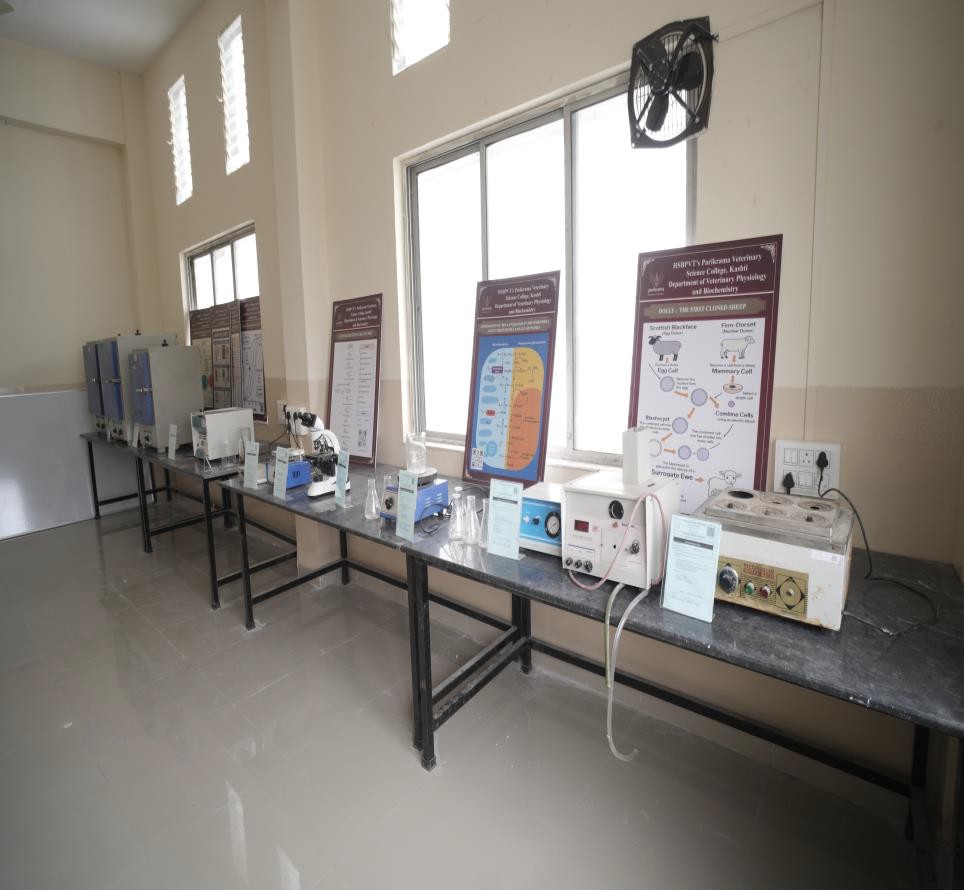
Biochemistry Lab